Source DME Standard Injection Mold for Automotive, Electronics, and Medical
Compare 30 listings for DME Standard Injection Mold designed for automotive, electronics, and medical applications. Buyers can evaluate mold materials, cavity configurations, and lead times to find suitable suppliers for custom plastic parts.
Key considerations
Products List


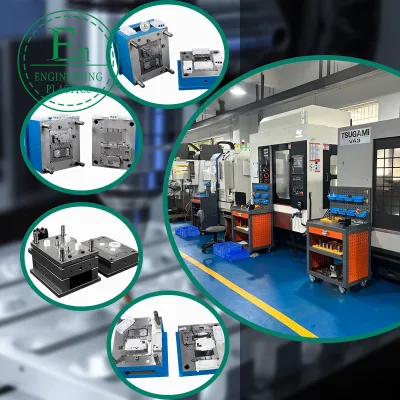
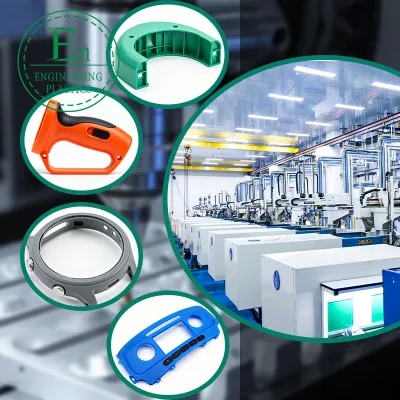


Custom Plastic Injection Mould for Durable and Precision Plastic Parts
$1000.00 - $3000.00
MOQ: 1 Pieces


OEM Customized Injection Mould with High Efficiency Production and Long Durability
$1000.00 - $15000.00
MOQ: 1 Sets


Comprehensive Sourcing Guide
Strategic Sourcing Guide for DME Standard Injection Molds
Understanding DME Standards and Mold Base Compatibility
When sourcing injection molds, particularly those referencing DME (Design Mold Engineering) standards, buyers must first distinguish between the mold base specifications and the actual tooling components. DME is a widely recognized standard for mold bases in the North American market, providing a catalog of standardized plates, guide pins, ejector systems, and cooling channels. While the supplied product data indicates that suppliers offer "SD, LKM Standard, HASCO Standard Self-made" bases alongside custom options, the specific mention of DME implies a need for compatibility with these established North American norms.
The core of the DME standard lies in the interchangeability of components. A mold built to DME specifications ensures that standard parts like guide pins, bushings, and ejector plates can be sourced globally without custom machining. However, the supplied facts reveal that manufacturers often provide bases in "SD, LKM Standard, HASCO Standard" formats, which are prevalent in Asian manufacturing hubs. Buyers researching "DME Standard Injection Mold" must verify if the supplier can strictly adhere to DME dimensions or if they are offering equivalent standards like LKM or HASCO that function similarly but differ in specific measurements. The "Shape" of the mold is explicitly noted as "According to Customers Designs," meaning the DME standard applies primarily to the base structure, while the cavity and core must be custom-machined to fit the specific product geometry.
Furthermore, the "Mould Base" attribute lists "SD, LKM Standard, HASCO Standard Self-made, etc." This suggests a flexible approach where the supplier may not strictly stock DME bases but can manufacture to the required specifications. For a buyer requiring strict DME compliance, it is critical to confirm that the supplier's "Self-made" bases align with the specific DME catalog dimensions. The "Tolerance" is listed as "+/-0.01mm / OEM," which is a precise metric that must be maintained regardless of whether the base is DME, LKM, or custom. This tolerance level is essential for ensuring that the mold fits into standard injection molding machines and that the cavities align perfectly to prevent flash or part defects.
Technical Specifications and Material Selection
The technical performance of an injection mold is heavily dependent on the material chosen for the cavity and core, as well as the overall mold life. The supplied product facts list a robust range of mold materials including "718h, S136, P20, Nak80, etc." and "P20 / 718 / 738H /NAK80 / S136 etc." These materials are industry-standard choices for different application requirements. P20 is a common pre-hardened steel suitable for general-purpose molding, while S136 and 718H offer superior corrosion resistance and polishability, making them ideal for transparent parts or corrosive materials. Nak80 is often selected for its excellent surface finish and fast heat dissipation.
The "Mould Life" is a critical specification, with the data indicating a range of "100,000-500,000 Shots" in one context and "50,000-500,000 Shots" in another. This variance highlights the importance of matching the material to the production volume. A mold designed for 500,000 shots using S136 will have a significantly longer lifespan than one using P20 for the same volume. Buyers must evaluate the expected production run before selecting the material. The "Shaping Mode" is consistently identified as "Injection Mould" or "Plastic Injection Mould," confirming the primary manufacturing process.
Additional technical attributes include the "Cavity" configuration, which can be "Single Cavity / Multi-Cavity." The choice between single and multi-cavity impacts the production rate and the initial cost. Multi-cavity molds increase output per cycle but require more complex cooling and ejection systems. The "Capability" of the supplier is noted as "up to 1500mm," which defines the maximum part size that can be accommodated within the mold base. This dimension is crucial for buyers with large components, as it determines the physical limits of the tooling. The "Drawing Format" supports industry-standard files like ".STP / .Step / .Igs /.Stl /.Dwg / .Pdf," ensuring that the design data can be seamlessly transferred between CAD systems and the manufacturer's CNC machines.
Compliance, Certification, and Quality Assurance
In the B2B procurement of industrial tooling, compliance and certification serve as proxies for quality management systems and reliability. The supplied facts explicitly list several certifications, including "TSISO," "ISO," "RoHS," and "TS16949." The presence of "TS16949" (now IATF 16949) is particularly significant for buyers in the automotive sector, as this standard specifically addresses quality management for automotive production and service parts. It indicates that the supplier has a robust system for defect prevention and variation reduction.
The "ISO" certification generally refers to ISO 9001, a quality management standard that ensures consistent product and service delivery. While the low-confidence background mentions "ISO 9001" as a general standard, the high-confidence facts confirm "ISO" and "TS16949" as actual certifications held by the supplier. Buyers should verify the validity of these certificates and ensure they cover the specific manufacturing activities required for their project. The "RoHS" certification is relevant for products that will be sold in markets with restrictions on hazardous substances, such as the European Union. This is particularly important for electronic and automotive applications where lead and other heavy metals are regulated.
Quality assurance also extends to the "Surface Treatment" options, which include "Polishing / Painting / Texture etc." These treatments affect the final appearance and functionality of the molded part. The "Tolerance" of "+/-0.01mm" is a specific claim that buyers must verify through inspection reports or third-party testing. While the data suggests this tolerance is achievable, it is an observation of the supplier's capability rather than a guarantee for every specific order. Buyers should request sample parts or first-article inspection reports to confirm that the mold consistently meets these dimensional requirements. The "Standard" is listed as "Custom" or "OEM," indicating that while the base may follow industry standards, the final tooling is tailored to the buyer's specific needs.
Cost Drivers and Procurement Economics
Understanding the cost structure of injection mold procurement is essential for budgeting and negotiation. The observed price range in the market data is "0.1-100000" USD, a vast spread that reflects the difference between simple prototype molds and complex, high-cavity production tools. The "MOQ" (Minimum Order Quantity) ranges from "1-500," suggesting flexibility for both small-batch prototyping and large-scale production runs. However, the "MOQ" for the mold itself is typically one unit, while the MOQ for the molded parts may vary.
Several factors drive the cost of a DME Standard Injection Mold. The "Mould Material" is a primary driver; switching from P20 to S136 or 718H will increase the initial tooling cost significantly due to the higher price of the raw steel and the additional machining time required for heat treatment. The "Cavity" count is another major factor; a multi-cavity mold requires more precise machining and more complex cooling channels, increasing both material and labor costs. The "Lead Time" is listed as "25-35 Days," which is a standard duration for custom mold fabrication. This timeline includes the design, machining, assembly, and trial phases.
The "Sample Time" of "3-7 Days" indicates the speed at which a prototype or trial part can be produced after the mold is ready. This is distinct from the full lead time and is crucial for project scheduling. The "Service" offerings, including "OEM/ODM/Obm, Custom Logo / Packaging, 3D Design Dr," add value but also influence the final price. Buyers should clarify whether the design service is included in the mold cost or billed separately. The "prod_packing" options, such as "Catons, Pallets, Wooden Cartons," also affect logistics costs, especially for international shipping. The "Single gross weight" of "1.000 kg" for a single package suggests that the weight of the mold components varies, and shipping costs should be calculated based on the actual dimensions and weight of the specific mold being ordered.
Typical Applications and Industry Suitability
The versatility of injection molds allows them to serve a wide array of industries. The supplied facts list applications including "Car, Household Appliances, Electronic, Hardware, Commodity, Home Use, Furniture," as well as "Automotive, Electronics, Household, Medical." This broad scope indicates that the supplier is capable of producing molds for diverse sectors, each with its own unique requirements.
For the automotive industry, the "TS16949" certification is a prerequisite, and the "Mould Life" of up to 500,000 shots is often necessary to meet high-volume production demands. The "Material" selection for automotive parts often prioritizes durability and resistance to chemicals, making S136 or 718H preferred choices. In the medical sector, the "RoHS" certification and the ability to produce parts with high precision ("+/-0.01mm") are critical. Medical devices often require biocompatible materials and strict cleanliness, which the "Surface Treatment" options like polishing can support.
The "Application" also extends to "Food Processing Injection Molding" and "Chemical industry injection molding," suggesting that the molds can be designed to handle specific environmental conditions. The "Shaping Mode" of "Injection Mould" is suitable for mass-producing complex geometries that would be difficult or impossible to achieve with other manufacturing methods. The "Brand Name" of "Engineering plastics" suggests a focus on high-performance materials, which are often required for industrial and technical applications. Buyers should ensure that the supplier has experience in their specific industry, as the requirements for mold design, cooling, and ejection can vary significantly between sectors.
Supplier Evaluation and Long-Term Procurement Strategy
Evaluating a supplier for injection mold procurement requires a holistic approach that goes beyond price and lead time. The "Customization" attribute being "Available" and "Customized" confirms that the supplier is flexible, but buyers must assess the depth of this customization. Can they handle complex geometries? Do they offer 3D design services to optimize the mold for manufacturability? The "Prototype Process" options, including "3D Printing, Vacuum Forming, CNC," indicate a capability to create rapid prototypes before committing to full mold production, which is a valuable risk mitigation strategy.
Long-term procurement considerations include the "Mould Life" and the potential for maintenance. A mold with a life of 500,000 shots may require less frequent replacement but could have higher initial costs. Buyers should consider the total cost of ownership, including maintenance, repair, and potential downtime. The "Service" offering of "OEM/ODM/Obm" suggests that the supplier can support the buyer throughout the product lifecycle, from initial design to mass production. The "Drawing Format" compatibility ensures that design changes can be easily implemented, which is crucial for iterative product development.
When selecting a supplier, buyers should verify the "Place of Origin," which is listed as "Guangdong, China." This region is a major hub for manufacturing, offering a dense ecosystem of suppliers and subcontractors. However, buyers must also consider logistics, communication, and time zone differences. The "Small Orders: Accepted" attribute is beneficial for startups or companies testing new products, as it reduces the financial risk of initial orders. Finally, the "Lead Time" of 25-35 days should be factored into the overall project timeline, with buffer time for potential delays or revisions. By carefully evaluating these factors, buyers can establish a sustainable partnership that ensures high-quality tooling and reliable production.
FAQs
Can DME standard injection molds be customized to specific designs?
Yes, DME standard injection molds can be customized according to customer designs. The supplier offers shape customization and accepts various drawing formats like STEP and IGES to ensure the mold base and cavities meet exact product requirements.
What certifications do manufacturers of these molds typically hold?
Manufacturers often hold ISO, RoHS, and TS16949 certifications. TS16949 is particularly relevant for automotive applications, ensuring quality management systems are in place to prevent defects and reduce variation in the production process.
How long is the lead time for producing a custom injection mold?
The lead time for producing a custom injection mold typically ranges from 25 to 35 days. This period covers the design, machining, assembly, and trial phases required to deliver a functional tool ready for production.
Which materials are used for the cavity and core of these molds?
Common materials include P20, 718H, S136, and NAK80. These materials are selected based on the required mold life, with options like S136 offering superior corrosion resistance for high-volume or transparent part production.
What is the expected lifespan of a DME Standard Injection Mold?
The expected lifespan ranges from 50,000 to 500,000 shots depending on the material and application. Higher-grade steels like S136 can support the upper end of this range for demanding automotive or medical production runs.
Can small order quantities be accepted for prototype molds?
Yes, small orders are accepted with a minimum order quantity starting from 1 unit. This flexibility allows buyers to procure single prototype molds or small batches without committing to large-scale production volumes immediately.